


Why electric vehicles are as safe – or safer – than gas-powered vehicles.
It’s important to note that all light-duty cars and trucks sold in the United States must meet the Federal Motor Vehicle Safety Standards. And although there have been many myths about the safety of EVs, the facts show that EVs are as safe as gas-powered cars, and may even be safer.
EV technology and safety features have come a long way since first being introduced. There is more demand for EVs than ever before and manufacturers are developing advanced safety features that offer peace of mind when considering an electric vehicle.
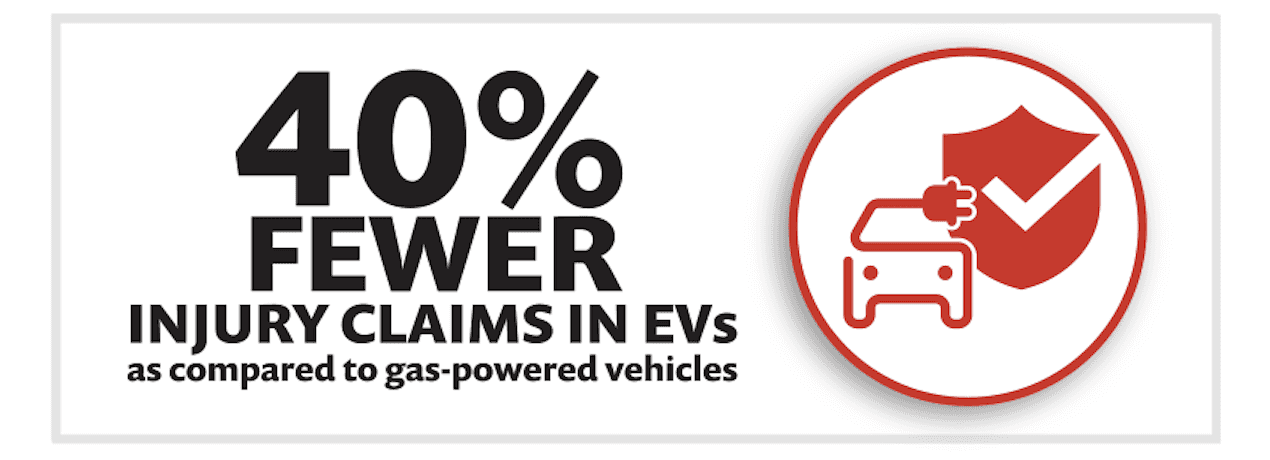
The Insurance Institute for Highway Safety (IIHS) suggests that EVs are safer than gas-powered vehicles, especially with evidence from a new insurance data analysis. Research shows that injury claims are substantially less frequent in EVs compared to gas-powered vehicles – over 40% lower than what was seen from conventional car occupants from 2011 to 2019, a trend similar to that of HLDI data about hybrid vehicles.
Three differentiating factors that make EVs safer
Gasless
One of the biggest reasons EVs are safer than gas-powered vehicles is the fact that gasoline is highly flammable and can ignite easily in an accident. Data from the National Transportation Safety Board and Bureau of Transportation Statistics found that gas cars saw fires in 1,530 out of 100,000 cars while battery electric vehicles had only 25 per 100,000.
Center of Gravity
EVs are considered safer due to the fact that their batteries are positioned low in the vehicle, causing the car to have a lower center of gravity. This makes EVs more stable than conventional cars by improving their cornering and handling, resulting in fewer chances of rollovers during hard turns.
Vehicle Weight
EV battery packs can weigh thousands of pounds and that extra weight could actually result in a higher level of safety. In collisions, less force is exerted on occupants of heavier vehicles vs. lighter ones. In addition, EVs dissipate crash energy using absorbent and collapsible structures (built to protect the battery) that are not utilized in standard gas-powered vehicles.
Other Considerations
Crumple Zones
Since EVs don’t carry large gas engines, they are built with sturdier upfront designs that typically transmit crash energy toward the back of the vehicle. In addition, the batteries will assist in absorbing energy during a crash.
EV Safety Features
One of the reasons that insurance claims for people in EVs are lower than gas-powered cars may be attributed to advanced technology and EV safety features such as forward collision protection, lane assist, automatic emergency braking, and more. Electric vehicles are generally more modern and high-tech, making it more likely they’ll have the latest crash avoidance and survival technologies. The coexistence of technology and human expertise coupled with cutting-edge advancements will continue to make EVs safer to drive.
Battery Durability
Today’s high-tech EV batteries are sealed in shells and are tested for conditions such as overcharge, vibration, extreme temperatures, humidity, fire, and water immersion. They are designed to avoid damage in all but the most severe crashes.
The world’s top automotive brands are constantly testing and upgrading safety features on EVs. The Mercedes-Benz 1,300-acre test facility in Germany analyzes its latest safety technology and innovative new features that are designed to maximize safe travel under a variety of conditions. Some of these cutting-edge ideas include a “pink noise” that blasts through the speakers to constrict the inner ear – protecting hearing from the potentially explosive sound of firing airbags before they deploy and side impact detection that inflates small airbags built into the seats that create extra space between the passenger and the oncoming collision.
EVs are earning high marks from the National Highway Traffic Safety Administration. The 2021 Volkswagen ID.4 earned a 5-Star overall safety rating. Beyond the multiple front and side airbags, the ID.4 features IQ.DRIVE, an advanced driver assistance technology that is designed to monitor the driver’s surroundings and alert them of potential obstacles.
It’s reassuring to know that being environmentally friendly doesn’t compromise safety. As EV technology continues to evolve, more vehicles will incorporate enhanced safety features to keep passengers, pedestrians, and drivers safe while traveling.
If you’d like to learn more about all the safety features found in electric cars, SUVS or trucks, Baxter Auto is here to help.
Search
Search By Keyword
Search By Filters
Share
Choose How To Share:
Contact
17950 Burt Street • Omaha, NE 68118
Get Directions